 Edinburgh Boilers Services
How Often Should You Service Your Boiler in Edinburgh?
Most boiler manufacturers recommend a service once every twelve months, and that advice holds for Edinburgh homes just as it does anywhere else in the UK. What does vary locally is the condition of your water supply, the age of Edinburgh's housing stock, and the particular demands placed on boilers during long Scottish winters. Those factors shape how much attention your boiler actually needs, even if the basic interval stays the same.
The Recommended Servicing Frequency
One service per year is the standard for gas-fired boilers across Great Britain. Skipping a year may seem harmless, but combustion components drift out of calibration, heat exchangers accumulate debris, and small leaks go undetected until they become expensive faults. Annual servicing also keeps most manufacturer warranties valid. Worcester Bosch, Vaillant, and Viessmann all require documented annual service records to honour their 5–10 year manufacturer warranties.
For Edinburgh landlords the requirement is firmer still. A Gas Safety Record, also known as a CP12, must be renewed every twelve months for each gas appliance in a rented property. The certificate costs £60–£100 per property as a standalone visit, though many engineers discount it when combined with an annual service. Failing to hold a valid Gas Safety Record is a criminal offence under gas safety regulations.
Does Edinburgh's Water Affect How Often You Should Service?
Edinburgh sits in a soft-to-moderately-soft water area, which is genuinely good news for your boiler. Hard water causes limescale to build up inside heat exchangers and pipes, reducing efficiency and shortening component life. Because Edinburgh's mains supply carries relatively low mineral content, limescale is a smaller concern here than in, say, parts of south-east England.
That said, Edinburgh tenements and Victorian terraces often have older pipework that introduces iron oxide sludge into the system. Sludge circulates through the boiler and radiators, reducing heat output and forcing the pump to work harder. A magnetic system filter, fitted during a service visit, traps this debris before it reaches the boiler. If your radiators have cold patches at the bottom or your boiler runs louder than it used to, sludge is a likely culprit.
Power Flushing and Chemical Dosing
Power flushing is a more intensive clean that forces water and cleaning chemicals through the entire central heating circuit. It is not a substitute for annual servicing, but it may be recommended every five to eight years on older Edinburgh systems, particularly before a new boiler is installed. Installing a new boiler onto a contaminated system can void the warranty and cause premature failure.
Chemical inhibitor, added to the system water during a service, slows future corrosion and sludge formation. Your engineer should check and top up inhibitor levels at each annual visit.
What Happens During a Boiler Service?
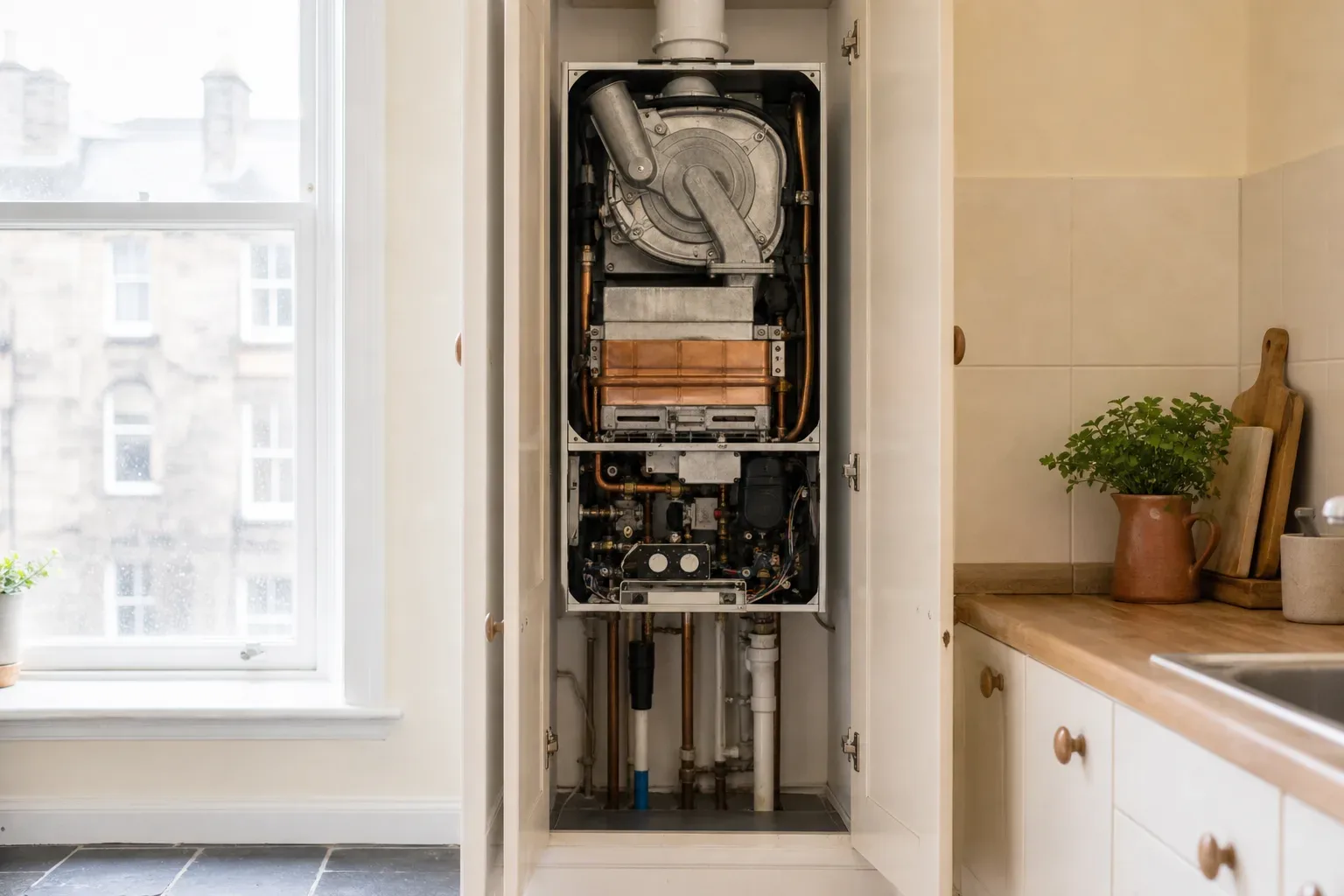
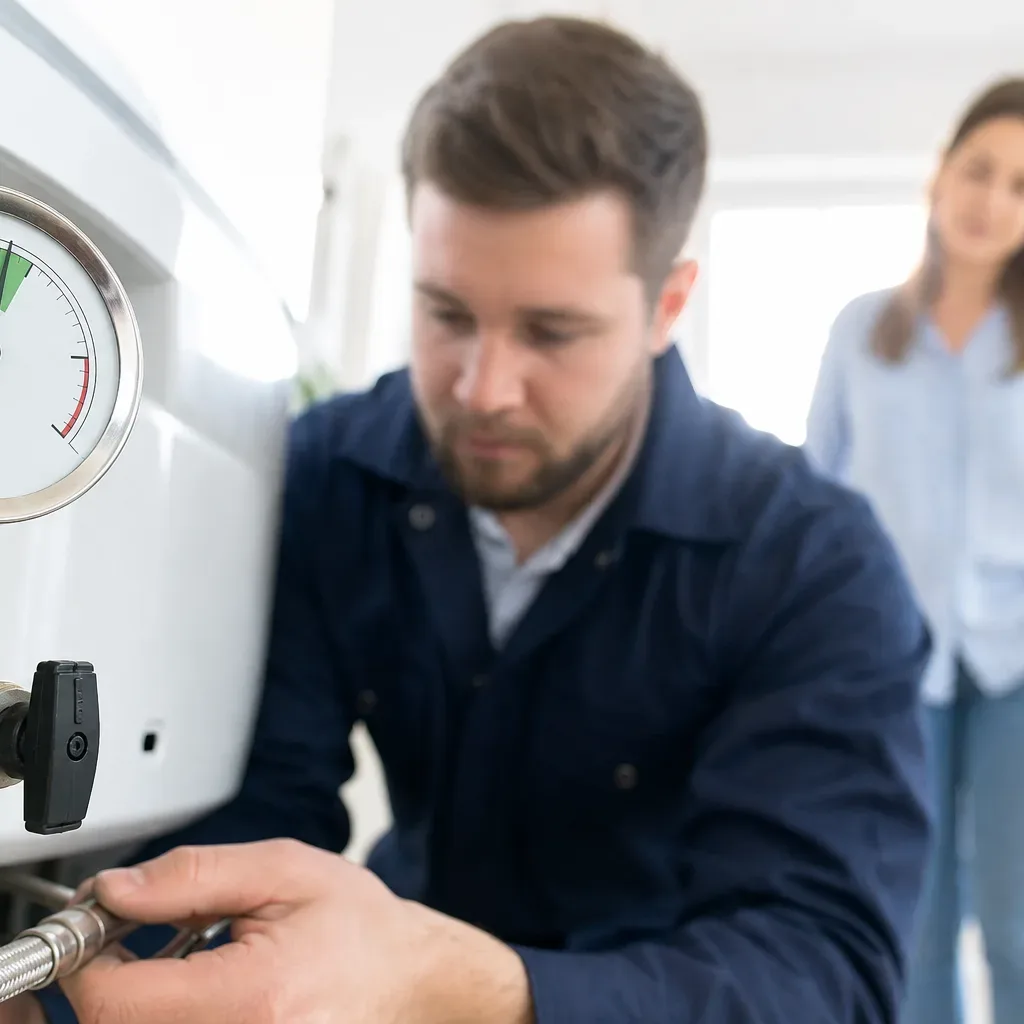
A standard annual service takes 60–90 minutes. The engineer checks the burner, heat exchanger, flue, and all safety controls. They also inspect the condensate trap, test combustion gas readings, and look for signs of carbon monoxide risk.
All engineers carrying out gas work in Great Britain must be Gas Safe registered. Ask to see the engineer's Gas Safe ID card before they start work. The card includes a registration number you can verify on the Gas Safe Register website. Never allow an unregistered engineer to work on a gas appliance.
Expect to pay £80–£120 for a standard annual gas boiler service in Edinburgh. That figure covers the visit and labour. Any replacement parts, such as an igniter or pressure relief valve, are charged separately.
Signs Your Boiler Needs Attention Before the Next Service
Annual servicing catches most problems early, but certain symptoms warrant a call before twelve months is up. Yellow or orange burner flames, instead of blue, suggest incomplete combustion. A persistent smell of gas or eggs near the boiler requires immediate action: leave the property, do not operate any switches, and call the National Gas Emergency line on 0800 111 999.
Frequent pressure drops, water pooling around the casing, and banging or kettling noises all indicate faults that servicing alone will not fix. A repair call-out on a standard weekday runs £80–£150 for the visit and first hour of labour, with parts on top. Emergency out-of-hours attendance costs £150–£250.
When to Consider Replacing Rather Than Servicing
A modern A-rated condensing boiler has a typical lifespan of 10–15 years with annual servicing. As a boiler ages past that range, repair costs tend to rise while efficiency falls, particularly compared with current models that convert more than 90% of fuel to heat.
The repair-versus-replace calculation becomes straightforward once a single repair quote approaches half the cost of a new installation. A combi boiler supply and fit in Edinburgh runs £1,800–£3,500 for a mid-range model. A system boiler with a hot water cylinder, more common in larger Edinburgh tenements and family homes, typically costs £2,200–£4,000. Continuing to service a boiler beyond 15 years is not automatically wrong, but it is worth getting an honest assessment from a Gas Safe engineer rather than assuming it will last indefinitely.
Efficiency Losses in Older Boilers
Older non-condensing boilers, which are still found in some Edinburgh properties, operate at around 70–80% efficiency. Replacing one with an A-rated condensing model can reduce gas consumption noticeably, with savings depending on property size, occupancy patterns, and current tariff rates. The service itself does not change the fundamental efficiency ceiling of an ageing boiler.
How to Get the Most from Each Service Visit
Book your service before the heating season starts, ideally in August or September, when engineers are less stretched than during the winter call-out peak. Keep a record of each service date and the engineer's Gas Safe number. These records matter if you sell the property or make a warranty claim.
Bleed your radiators a week or two before the service visit. This removes trapped air, allows the engineer to assess system pressure accurately, and means the whole system is in its normal operating state when they check it. If you have a magnetic filter fitted, the engineer will clean it during the visit, which takes only a few minutes but significantly extends component life over successive years.
Frequently Asked Questions
How Often Do You Need a Boiler Serviced in Edinburgh?
Once every twelve months is the standard recommendation for gas boilers in Edinburgh and across Great Britain. Annual servicing keeps manufacturer warranties valid, satisfies landlord legal obligations under gas safety regulations, and catches faults before they become costly repairs.
How Often Do You Need a Boiler Serviced?
Gas boilers should be serviced every year regardless of location. Most manufacturers, including Worcester Bosch, Vaillant, and Viessmann, require annual documented services to honour their 5–10 year warranties. Missing a service does not immediately break the boiler, but it allows minor faults to develop unnoticed and may invalidate warranty cover.
What Is the Average Lifespan of a Boiler?
A modern A-rated condensing boiler typically lasts 10–15 years with annual servicing. Well-maintained units can exceed that range, while boilers that miss regular services tend to develop faults earlier. Once repair costs begin climbing toward half the cost of a replacement, a new installation usually makes more financial sense.
Is a 20 Year Old Boiler Considered Old?
Yes. A 20-year-old boiler is well beyond the typical 10–15 year lifespan for a modern condensing unit. Older non-condensing boilers also operate at around 70–80% efficiency, significantly below current A-rated models. At that age, an honest assessment from a Gas Safe engineer will help you decide whether continued servicing and repair still represents value.
How Does a Boiler Work?
A gas boiler burns fuel in a combustion chamber and passes the hot gases over a heat exchanger, which transfers heat to the water circulating through your central heating system and hot water taps. A condensing boiler extracts additional heat from the exhaust gases before they leave via the flue, which is why these units achieve higher efficiency ratings. The pump moves heated water around the radiators and back to the boiler to be reheated in a continuous loop.