 Edinburgh Boilers Services
Boiler Losing Pressure in Edinburgh - Causes and Fixes
A boiler pressure gauge sitting below 1 bar, or dropping back down within hours of being topped up, is one of the most common calls Edinburgh heating engineers receive. The problem ranges from a simple bleed of air through a radiator valve to a cracked heat exchanger that needs immediate attention. Understanding which category your situation falls into saves time and money.
What Causes a Boiler to Lose Pressure in Edinburgh?
Pressure drops when water escapes the sealed central heating circuit, or when air enters and displaces it. The four most frequent causes are listed below, roughly in order of how often engineers encounter them in Edinburgh homes.
Leaking Radiator Valves
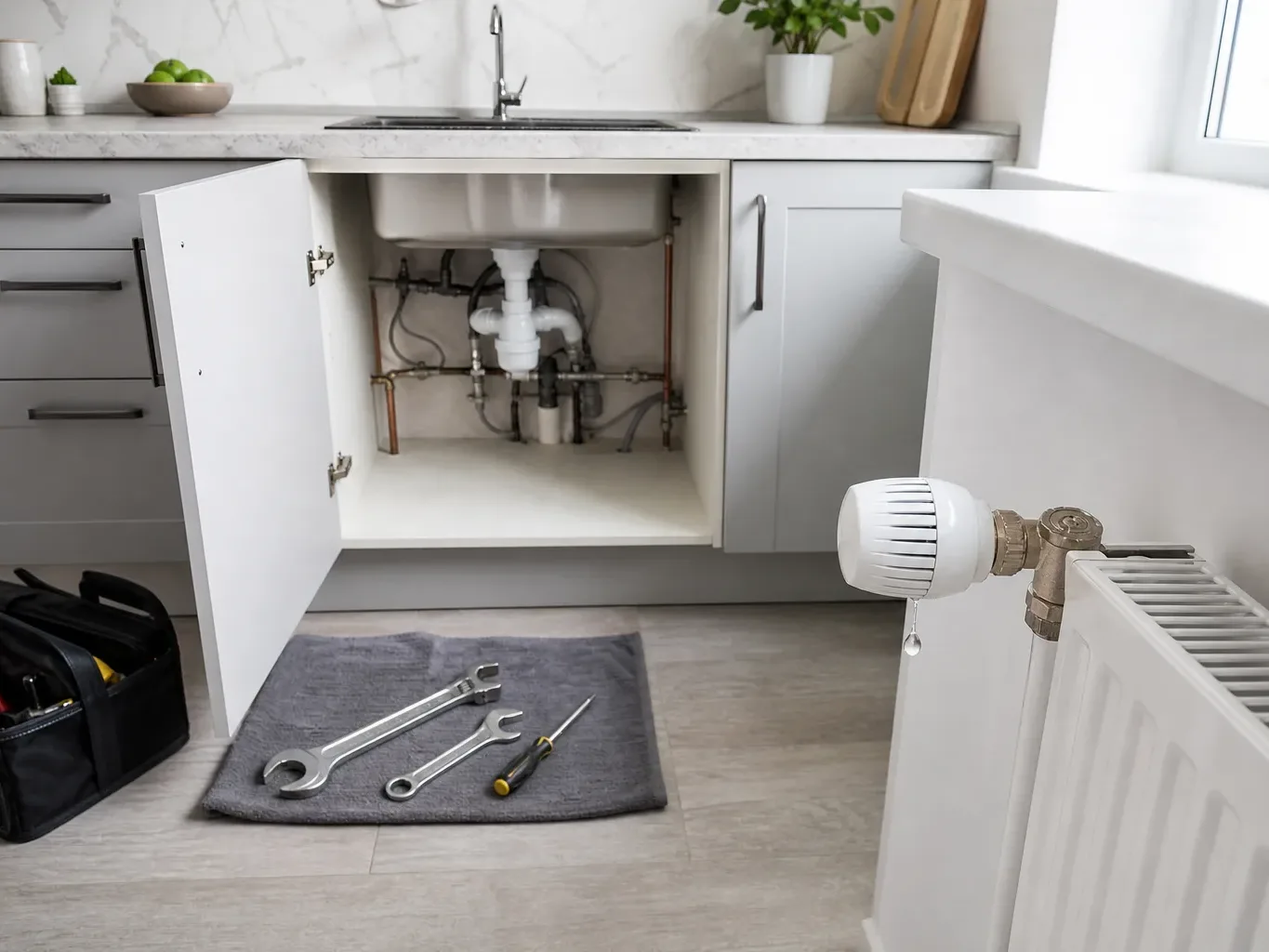
Thermostatic radiator valves, particularly older brass bodies on tenement-era pipework, develop slow weeps that evaporate before you spot a puddle. Run a dry piece of kitchen roll along each valve body and check for damp. Even a pinprick drip can drop system pressure by 0.5 bar over a couple of days.
Faulty Pressure Relief Valve
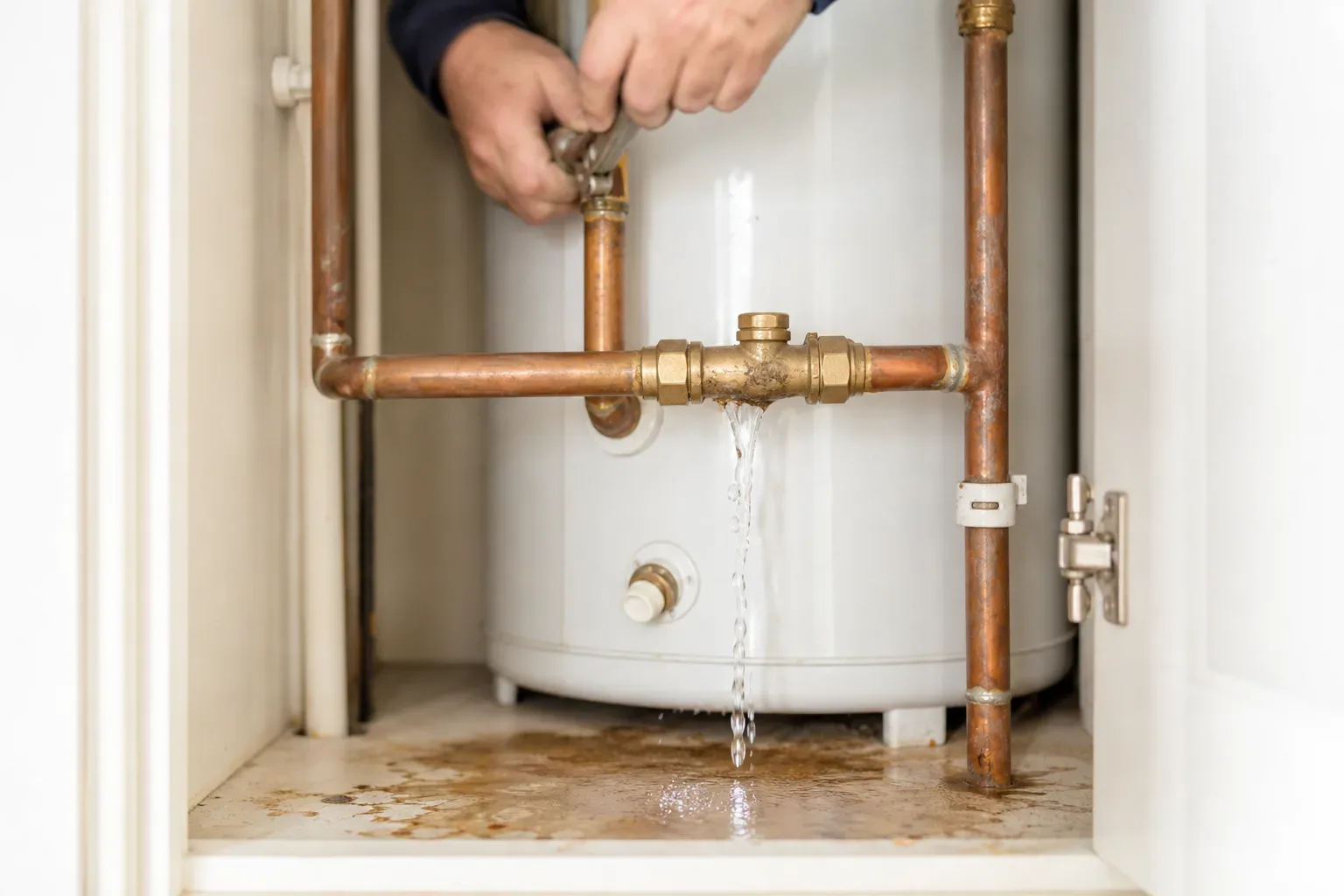
The pressure relief valve is a safety device that opens if system pressure climbs too high, usually above 3 bar. If the valve seat deteriorates, it starts dripping continuously, discharging water through a pipe that terminates outside the building. In Edinburgh tenements, that pipe often exits through a close wall or into a rear court, so the drip goes unnoticed for weeks.
Failing Expansion Vessel
Every sealed heating system contains an expansion vessel, a small tank with a rubber diaphragm that absorbs pressure changes as water heats and cools. When the diaphragm perishes, the vessel loses its charge and pressure swings become erratic. The boiler may read 1 bar when cold, spike past 2.5 bar when firing, and settle back too low as it cools. This cycle stresses the pressure relief valve, which can then start leaking, compounding the problem.
Internal Boiler Leaks
Seals around the pump, heat exchanger joints, or pipe connections inside the boiler casing can weep slowly. A correctly serviced A-rated condensing boiler should not develop these faults within its first several years, but older units beyond the 10–15 year expected lifespan are increasingly prone to internal drips.
Radiators Needing Bleeding
Air trapped in radiators does not cause pressure loss directly, but bleeding releases water along with the air, which drops system pressure slightly. If you bled several radiators recently and the pressure fell, topping up is the correct next step.
How Do I Top Up My Boiler Pressure in Edinburgh?
Most combi and system boilers installed in Edinburgh homes have a filling loop, either an external flexible silver hose or an internal keyway valve, that lets you add mains water to restore pressure.
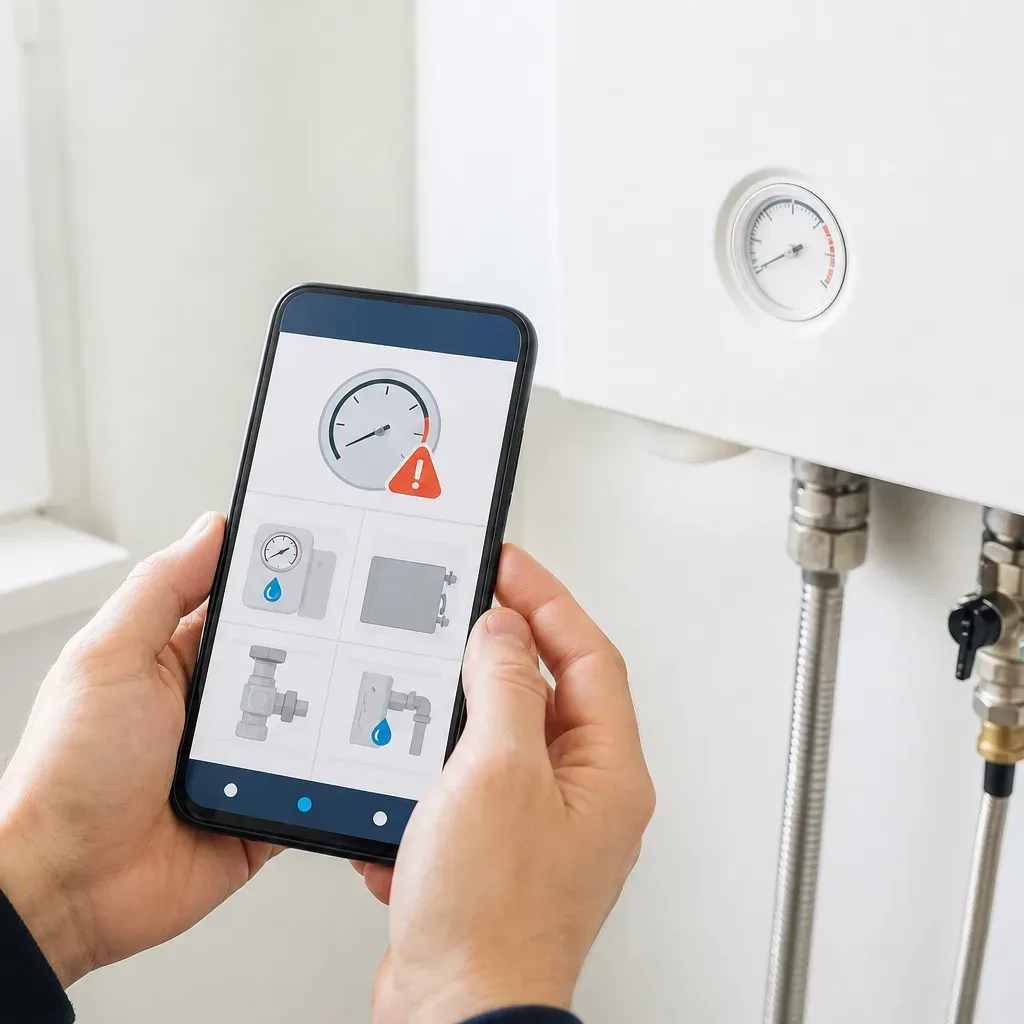
Before starting, switch the boiler off and let it cool. Locate the filling loop, usually beneath the boiler. Open the valves slowly until the pressure gauge climbs to between 1 and 1.5 bar, then close both valves completely. Switch the boiler back on and check the gauge again once it has reached operating temperature.
Pressure should sit between 1.5 and 2 bar when hot.
If your gauge has no markings, the green zone on the dial is your target. Never fill past 2.5 bar. Models from Worcester Bosch, Vaillant, and Viessmann, which are common across Edinburgh new builds and Victorian tenement refurbishments alike, follow this same general procedure, though the loop location varies. Your installer handbook will show the exact position.
Is It Safe If My Boiler Keeps Losing Pressure?
A single pressure drop that you can trace to a recent radiator bleed is low risk, but repeated drops without an obvious cause indicate an active leak that requires investigation. Running a boiler that repeatedly falls below 0.5 bar can damage the pump, as it is designed to circulate water rather than run partially dry.
There is no carbon monoxide risk directly from low pressure, but the underlying cause of a persistent leak may involve gas pipework if an engineer needs to access internal boiler components. Any work inside the boiler casing must be carried out by a Gas Safe registered engineer.
If you smell gas at any point, do not attempt to top up the boiler. Leave the property, avoid using electrical switches, and call the National Gas Emergency Service on 0800 111 999.
When Should I Call a Professional About Boiler Pressure Loss?
Call a Gas Safe registered engineer if the pressure drops more than once a week, if you cannot locate the source of the loss, or if any visible leak is present.
Some situations should not wait even that long. A continuous drip from the pressure relief valve discharge pipe, water pooling beneath the boiler, or a pressure gauge that swings wildly between cold and hot readings all warrant same-day attention. Edinburgh heating engineers generally aim for attendance within 24 hours for emergency boiler faults.
Diagnosis and labour for a standard weekday call-out sits at £80–£150, with parts charged on top. A replacement expansion vessel, for example, typically adds £150–£300 in parts and additional labour to that figure. That is a straightforward repair for a Gas Safe registered engineer and usually completes within a couple of hours.
If the boiler is beyond the 10–15 year lifespan for a modern condensing unit and requires multiple pressure-related repairs in a short period, a full replacement may be more cost-effective. A new combi boiler supply and fit in Edinburgh runs £1,800–£3,500 for a mid-range unit, while a system boiler with cylinder typically costs £2,200–£4,000.
How to Prevent Pressure Problems Long-Term
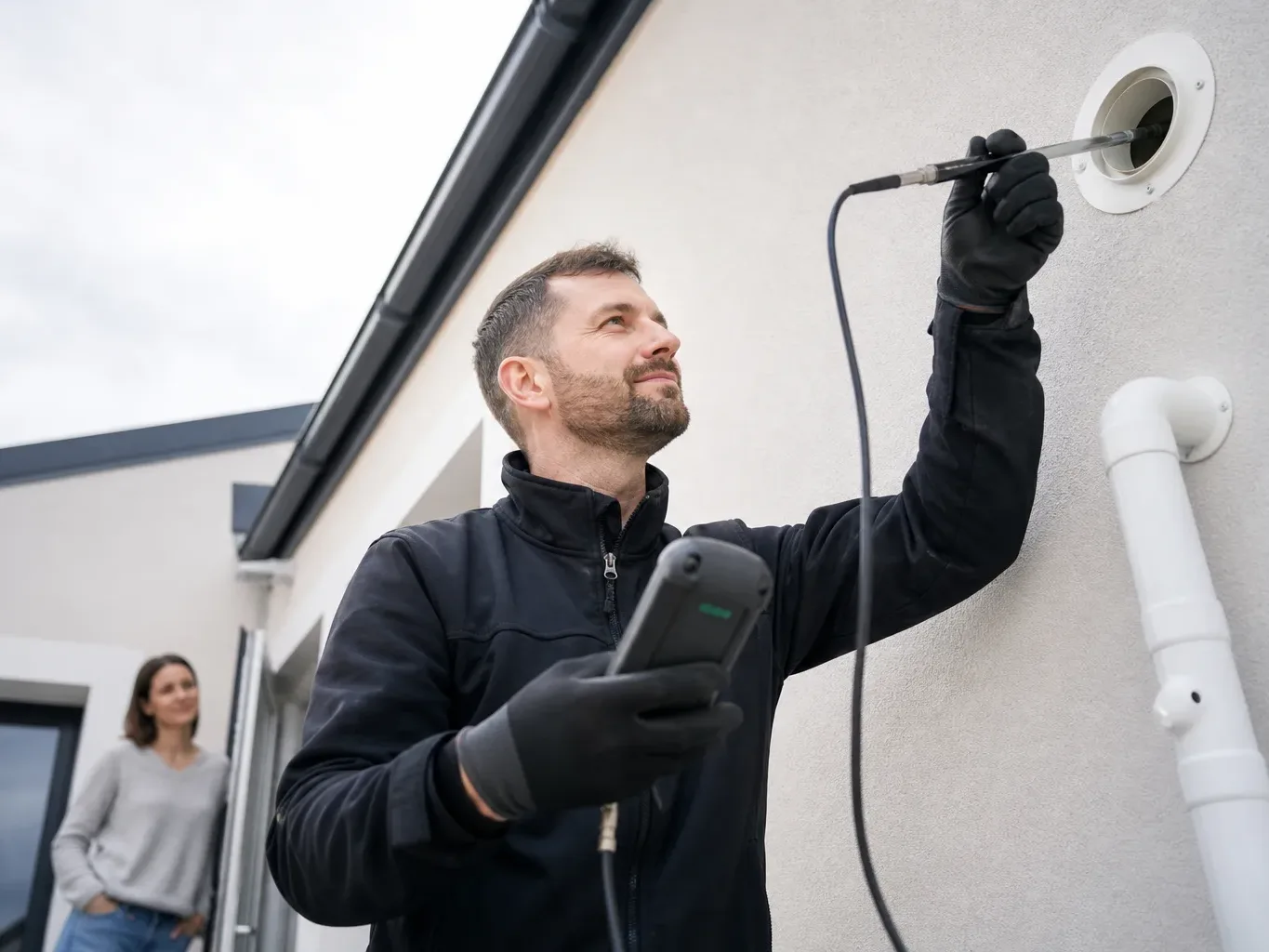
An annual boiler service, costing £80–£120 for a standard gas boiler in Edinburgh, catches deteriorating expansion vessels and weeping valves before they become failures. During a service, which takes 60–90 minutes, the engineer checks system pressure behaviour under firing conditions, inspects the pressure relief valve seat, and re-pressurises the expansion vessel if needed.
Magnetic system filters fitted to the return pipework reduce sludge buildup that can accelerate pump seal wear. Power-flushing an older system before fitting a new boiler also extends component life and maintains stable pressure across the whole circuit.
Keeping a note of when you top up the system, with the date and how much pressure you added, gives an engineer a useful history if the fault becomes persistent. That log can shorten diagnostic time considerably and reduce your call-out costs.
Frequently Asked Questions
What Causes a Boiler to Lose Pressure in Edinburgh?
The most common causes are leaking radiator valves, a faulty pressure relief valve, a failing expansion vessel diaphragm, or internal boiler leaks around pump seals and heat exchanger joints. Older pipework in Edinburgh tenements can develop slow weeps that are hard to spot without a close inspection.
How Do I Top Up My Boiler Pressure in Edinburgh?
Switch the boiler off and let it cool, then locate the filling loop beneath or near the boiler. Open the valves slowly until the pressure gauge reaches 1 to 1.5 bar, then close both valves. Switch the boiler back on and confirm pressure sits between 1.5 and 2 bar at operating temperature.
Is It Safe If My Boiler Keeps Losing Pressure?
A one-off drop after bleeding radiators is low risk, but repeated pressure loss points to an active leak that needs repair. Running a boiler repeatedly below 0.5 bar can damage the pump. There is no direct carbon monoxide risk from low pressure, but any work inside the boiler casing must be done by a Gas Safe registered engineer.
When Should I Call a Professional About Boiler Pressure Loss?
Call a Gas Safe registered engineer if pressure drops more than once a week, if you cannot find the source, or if there is any visible leak. A dripping pressure relief valve discharge pipe or water pooling under the boiler both warrant same-day attention. Standard call-out and first-hour labour typically costs £80–£150, with parts added on top.
How Much Does It Cost to Fix a Boiler Losing Pressure in Edinburgh?
A standard weekday call-out and first-hour labour runs £80–£150. Parts such as a replacement expansion vessel or pressure relief valve add to that figure. If the boiler is older than 10–15 years and needs repeated repairs, a new combi boiler supply and fit costs £1,800–£3,500, or £2,200–£4,000 for a system boiler with cylinder.